< BACK TO NEWS

From SEO to GEO: What Tourism Brands Need to Know in the Age of AI


Posted by Lizanne du Plessis on June 25, 2026

Eco Africa Digital CEO Lizanne du Plessis shares insights from her CNBC Africa interview on generative engine optimization, AI search, smart content and the future of tourism marketing in Africa.

CNBC Forbes Africa Marketing Money Media Interview Lizanne Du Plessis May 2026 GEO Video Story telling
From SEO to GEO: What Tourism Brands Need to Know in the Age of AI
CNBC Africa Forbes Interview Lizanne Du Plessis CEO Eco Africa Digital

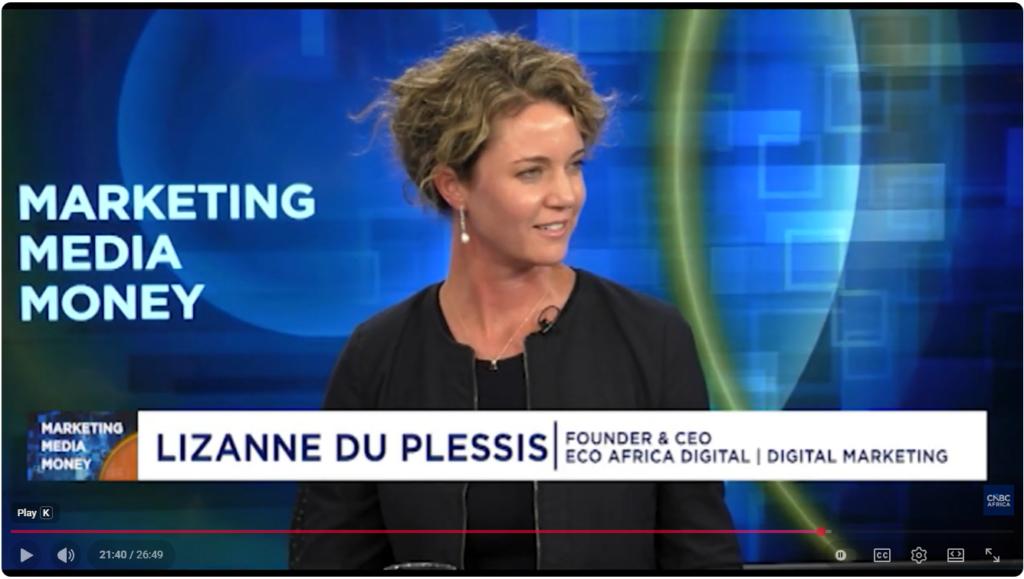
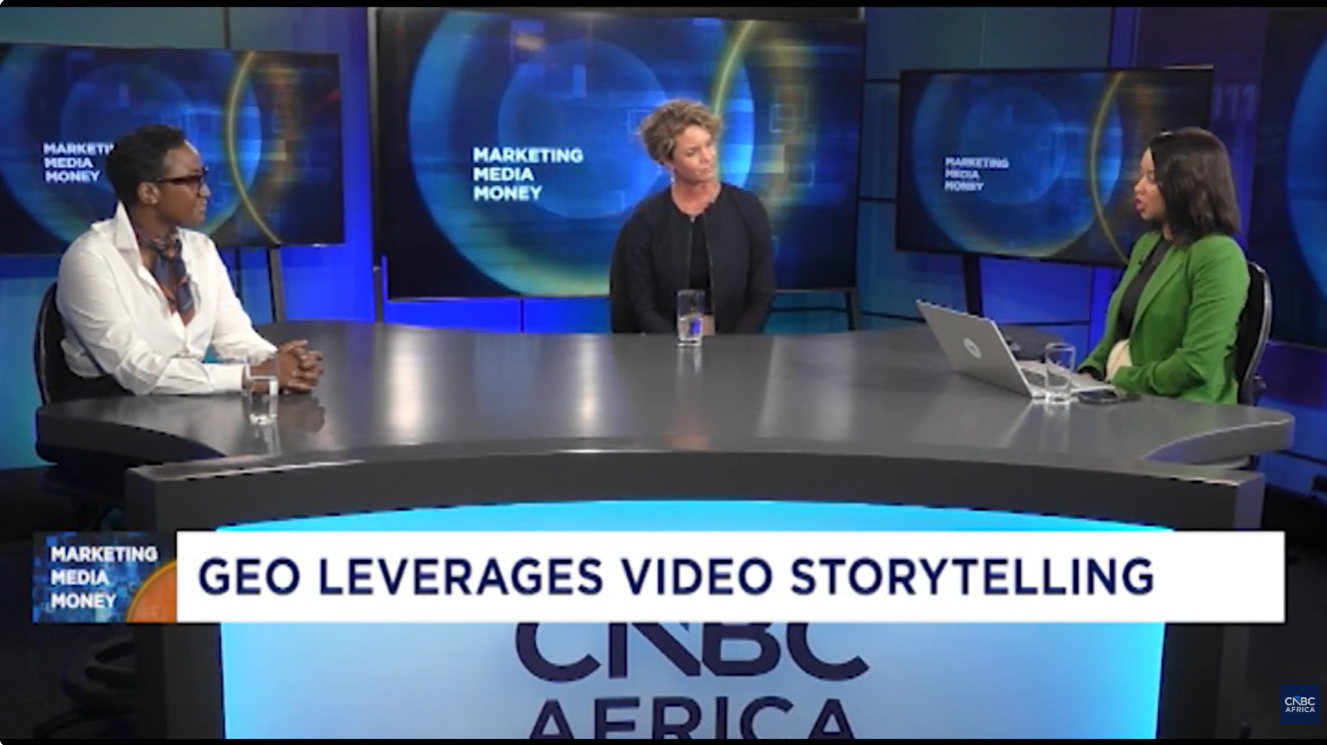
When I was invited to join CNBC Africa’s Marketing Media Money for a national television discussion on Generative Engine Optimization in the Age of AI, it confirmed something we have been seeing every day in our work at Eco Africa Digital:

Tourism marketing is entering a new era.

For many years, the digital marketing conversation has focused on SEO: how to rank on Google, how to structure website content, how to use keywords, how to attract organic traffic, and how to convert that traffic into enquiries and direct bookings.

Those fundamentals still matter.

But the way travellers discover, compare and choose destinations, lodges, hotels, guesthouses and experiences is changing fast. Search is no longer only about typing a phrase into Google and choosing from a list of blue links. Increasingly, people are asking AI tools for recommendations, ideas, itineraries and comparisons.

They are asking questions like:

  • “What is the best safari lodge in Botswana for a honeymoon?”
  • “Where should I stay in Stellenbosch if I love wine, food and walkable experiences?”
  • “What is the best family-friendly lodge near Kruger?”
  • “Which African destinations are best for a first-time safari?”
  • “What are the most authentic luxury travel experiences in Southern Africa?”

In this environment, tourism brands need to ask a new question:

Are we visible where AI is looking for answers?

That is where GEO — Generative Engine Optimization — becomes essential.
What is GEO?
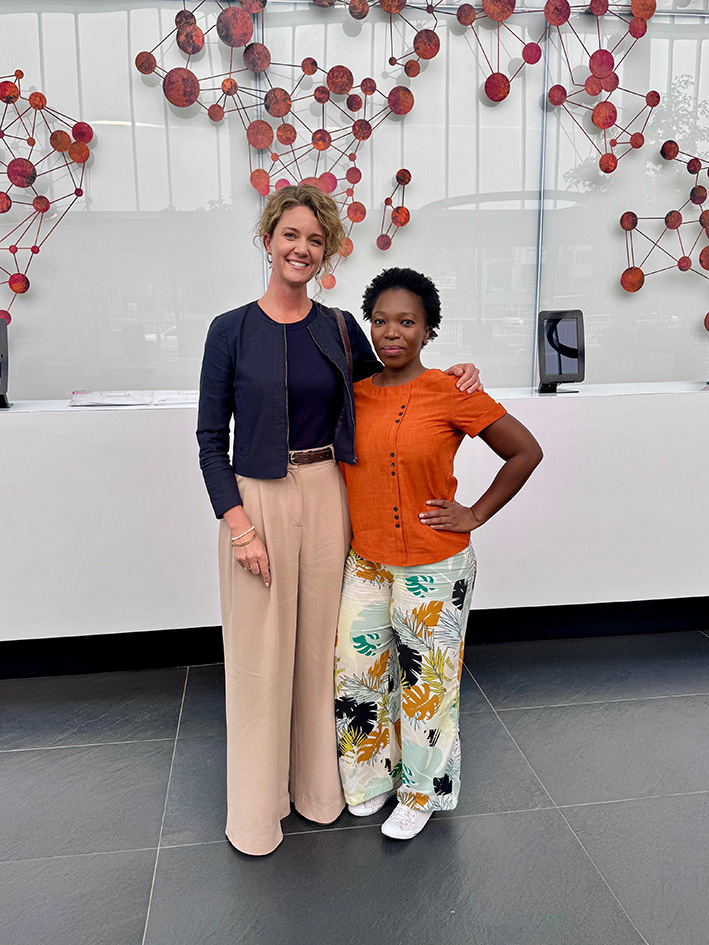
CNBC Africa Forbes building Sandton

GEO stands for Generative Engine Optimization. It is the practice of making your brand, website, content and digital ecosystem understandable, trustworthy and recommendable to generative AI platforms such as ChatGPT, Gemini, Perplexity and AI-enhanced search experiences.

Traditional SEO focuses largely on ranking in search engines.

GEO asks a broader question:

When AI generates an answer, will your brand be part of that answer?

For tourism and hospitality brands, this is a crucial shift. A traveller may no longer begin by clicking through ten different websites. They may ask an AI assistant for a shortlist. They may ask it to compare lodges. They may ask it to suggest the best area to stay in. They may ask it to explain which destination suits their travel style.

If your brand is absent from that answer, you may never make it into the traveller’s consideration set.

SEO is not dead — but it is no longer enough on its own

One of the key points raised during the CNBC Africa interview was whether traditional SEO is becoming obsolete.

The answer is no.

SEO is not dead. But SEO is evolving.

Technical SEO, fast-loading pages, mobile-friendly websites, helpful content, structured data, authority signals and good user experience still matter. In fact, they matter even more because AI tools need clear, structured, reliable information to understand what a brand offers.

But SEO can no longer live in isolation.

The old approach of creating keyword-heavy blog posts and hoping to rank is not enough. Tourism brands now need a more complete digital ecosystem that includes:

  • clear website architecture
  • helpful long-form content
  • destination and experience guides
  • FAQ-style content that answers real traveller questions
  • video transcripts and chapters
  • schema markup
  • strong social proof
  • reviews and ratings
  • social media visibility
  • PR and third-party citations
  • integrated booking and CRM systems
  • measurable direct booking attribution

This is where Eco Africa Digital’s 2026 SEO/GEO blog cluster strategy becomes so important.

Why tourism brands are especially affected by AI search

Tourism is not a simple product category.

People do not choose a lodge, destination or experience based only on price or availability. They choose based on trust, emotion, aspiration, context and reassurance.

A potential guest wants to know:

  • Is this place right for me?
  • Will it match my expectations?
  • Is it good for couples, families, solo travellers or groups?
  • Is it worth the price?
  • Is it authentic?
  • Is it safe?
  • What will the experience feel like?
  • Can I trust this brand with my holiday, honeymoon or once-in-a-lifetime safari?

That means tourism marketing has always depended on storytelling and trust.

AI search increases the importance of both.

When generative AI recommends a lodge, hotel or destination, it draws from the digital signals it can understand: website content, reviews, third-party mentions, structured information, articles, social signals, and the broader footprint of what is being said about the brand online.

In other words, AI does not only look at what you say about yourself. It also looks at whether the wider digital world confirms it.

This is why brand credibility, content depth and consistency matter more than ever.

Become the answer, not just another result

During the interview, I explained that tourism brands need to become the definitive answer for the areas where they genuinely have authority.

This starts with knowing who you are as a brand.

Before you create content for AI, you need to understand your authentic positioning:

  • What do you truly stand for?
  • What type of traveller are you best suited to serve?
  • What questions should your brand be able to answer better than anyone else?
  • What experiences, destinations or themes do you have genuine authority in?
  • What should AI associate your brand with?

For example, a lodge in Botswana should not try to be the answer for every possible safari search. It should identify where it can be genuinely authoritative.

That might be:

  • luxury Okavango Delta safaris
  • family-friendly Botswana lodges
  • romantic honeymoon safaris
  • photographic safaris
  • conservation-led travel
  • slow safari experiences
  • first-time safari planning
  • multi-generational African travel

Once this positioning is clear, the content strategy becomes much more powerful.

You are no longer writing random blogs. You are building a structured knowledge ecosystem around the topics where your brand deserves to be recommended.

The role of GEO content clusters
CNBC Forbes Africa Marketing Money Media Interview Lizanne Du Plessis May 2026

Lizanne Du Plessis CEO Eco Africa Digital

At Eco Africa Digital, our 2026 content strategy is moving beyond isolated SEO blogs and into structured SEO/GEO content clusters.

A content cluster begins with a strong pillar page or pillar blog. This is a comprehensive, authoritative piece of content on a broad topic.

For example:

Pillar topic: Botswana safari holidays

Around that pillar, we then create supporting content that answers specific traveller questions, such as:

  • Best Botswana safari lodges for honeymooners
  • Best Botswana safari lodges for families
  • When is the best time to visit the Okavango Delta?
  • Botswana versus South Africa for a first safari
  • What should I pack for a Botswana safari?
  • Is Botswana good for luxury safaris?
  • How many nights do you need for a Botswana safari?
  • What makes the Okavango Delta unique?

Each supporting blog answers a real question clearly and helpfully, while linking back to the main pillar topic.

This creates a web of relevance.

For search engines, it helps establish topical authority.

For AI engines, it helps clarify what your brand understands, what it can explain, and where it should be trusted as a useful source.

For travellers, it creates a better planning experience.

And for tourism businesses, it supports a stronger pathway from inspiration to direct booking.

Smart video is now part of SEO and GEO

Tourism is a visual industry. We rely heavily on beautiful imagery and video storytelling to communicate experience.

But in the age of AI, a beautiful video is not enough.

A video also needs to be readable.

This was one of the practical points I raised during the interview. AI tools need help understanding what is inside a video. That means tourism brands should not simply upload a three-minute lodge video and hope it performs.

They should support that video with:

  • accurate transcripts
  • clear video titles
  • keyword-rich descriptions
  • chapters
  • timestamps
  • FAQ-style breakdowns
  • schema markup where appropriate
  • supporting blog content
  • embedded video on relevant website pages

For example, a lodge video could be structured so that each section answers a specific question:

  • 0:00 – Where is the lodge located?
  • 0:20 – What makes the experience unique?
  • 0:45 – What do the rooms look like?
  • 1:10 – What safari activities are included?
  • 1:40 – Is it suitable for families or honeymooners?
  • 2:10 – What food and hospitality can guests expect?
  • 2:40 – How do guests book directly?

That video then becomes more than a brand asset. It becomes part of the brand’s searchable, understandable and recommendable content ecosystem.

This is especially important for tourism businesses that already invest in visual storytelling. The opportunity is to make every video work harder across search, AI discovery, social media and conversion.

Reviews, citations and community are becoming even more powerful

Another important theme from the CNBC Africa discussion was trust.

In traditional advertising, brands could buy attention. But in AI-led discovery, bought attention is not the same as trusted recommendation.

AI systems look for signals of credibility. These may include reviews, ratings, mentions, third-party articles, social content, media coverage, Reddit discussions, directory listings, awards, interviews and other forms of citation.

For tourism brands, this means your reputation ecosystem matters.

Your website is important, but it is not the only signal. AI may also be influenced by what guests say, what travel writers say, what destination bodies say, what review platforms show, and what other trusted sources publish about you.

That is why a modern tourism marketing strategy needs to include:

  • review generation
  • reputation management
  • digital PR
  • social media storytelling
  • guest-generated content
  • influencer and creator partnerships where appropriate
  • strategic partnerships
  • consistent brand messaging across platforms
  • accurate business listings
  • awards and credibility markers

The goal is not to manipulate AI.

The goal is to make sure that the real value of your brand is visible, consistent and verifiable across the digital ecosystem.

Integration is how tourism brands take back control

A major risk in digital tourism marketing is fragmentation.

One team handles social media. Another handles SEO. Another handles Google Ads. The booking engine sits somewhere else. The CRM is disconnected. Email marketing runs separately. Reviews are not part of the strategy. Reporting is incomplete.

In that environment, it becomes very difficult to control the brand narrative or prove return on investment.

In the age of AI, integration becomes even more important.

Tourism brands need a connected digital journey:

  1. A potential guest discovers the brand through search, social, AI, PR or advertising.
  2. They land on a website that clearly answers their questions.
  3. The website guides them through helpful content and strong calls to action.
  4. The booking engine is integrated and easy to use.
  5. The CRM captures guest data.
  6. Email marketing nurtures the relationship.
  7. Analytics tracks which channels influenced the booking.
  8. Reporting connects marketing activity to direct booking revenue.

This is how brands regain control.

Not by trying to control every conversation online, but by building a strong, connected ecosystem that makes the right story easy to find, easy to understand and easy to act on.

ROI still matters: direct bookings remain the goal

At Eco Africa Digital, we are not interested in visibility for visibility’s sake.

For our tourism and hospitality clients, digital marketing must ultimately support business results. In most cases, that means increasing qualified enquiries, improving conversion rates and growing direct bookings.

This does not change in the age of AI.

What changes is the journey people take before they book.

A guest may first discover a lodge through Instagram. Later, they may search on Google. Then they may ask ChatGPT or Gemini for a comparison. They may read reviews. They may watch a video. They may return to the website through a paid campaign. Finally, they may book directly.

If the systems are integrated correctly, we can begin to understand that journey.

We can see whether traffic came from social media, organic search, Google Ads, ChatGPT, Gemini or another source. We can analyse which channels assisted the booking, not only which channel received the final click.

That is why measurement needs to evolve alongside search behaviour.

The future of SEO and GEO is not only about rankings. It is about visibility, trust, assisted conversions, direct bookings and long-term brand authority.

How Eco Africa Digital is approaching SEO and GEO in 2026

Our 2026 SEO/GEO blog cluster plan is built around a clear belief:

Tourism brands need to become the most useful, trustworthy and discoverable answer in their category.

This means moving away from random content creation and toward strategic content ecosystems.

For our clients, we are focusing on:

  • identifying the brand’s true authority areas
  • mapping traveller questions across the funnel
  • creating pillar pages and supporting blog clusters
  • improving website structure and internal linking
  • adding FAQs and structured content
  • optimizing video with transcripts and chapters
  • strengthening schema markup
  • improving conversion paths
  • aligning SEO, paid media, social media and email marketing
  • tracking AI-influenced traffic and assisted conversions
  • building brand credibility across multiple digital touchpoints

This approach is especially powerful for tourism because travellers ask layered, emotional and practical questions before they book.

They do not only want a room.

They want confidence.

They want reassurance.

They want to know that the experience is right for them.

A strong SEO/GEO strategy helps answer those questions before the traveller ever speaks to the reservations team.

The opportunity for African tourism brands

Africa has an extraordinary opportunity in this new search landscape.

Our destinations are rich in story, culture, nature, hospitality and human connection. These are exactly the qualities that travellers are searching for — and that AI tools need structured, credible information to understand.

But if African tourism brands do not actively build their digital authority, AI systems may default to better-documented global brands, large OTAs or generic travel content.

That would be a missed opportunity.

The brands that move now will have a first-mover advantage.

They will be better positioned to appear in AI-generated recommendations, own their niche, answer traveller questions, build trust earlier in the journey and drive more direct business.

The future belongs to tourism brands that can combine:

  • authentic storytelling
  • technical excellence
  • structured content
  • strong reputation signals
  • integrated systems
  • measurable marketing performance

That is the new frontier of tourism marketing.

AI can help create smarter segmentation and content workflows, but the goal remains human: make every supporter feel seen, thanked and connected to the impact they helped create.

Final thoughts

Being part of this CNBC Africa conversation was a proud moment for Eco Africa Digital, not simply because it was national television, but because it placed tourism marketing at the centre of a much bigger conversation about AI, trust, search and the future of brand visibility.

For more than 12 years, we have helped tourism and hospitality businesses grow their visibility and direct bookings through digital marketing.

Now, as SEO evolves into GEO, our role is to help brands prepare for the next phase of discovery.

The question is no longer only:

Do you rank on Google?

The question is becoming:

Are you trusted enough, structured enough and visible enough to be recommended by AI?

For tourism brands, that is where the next competitive advantage will be built.

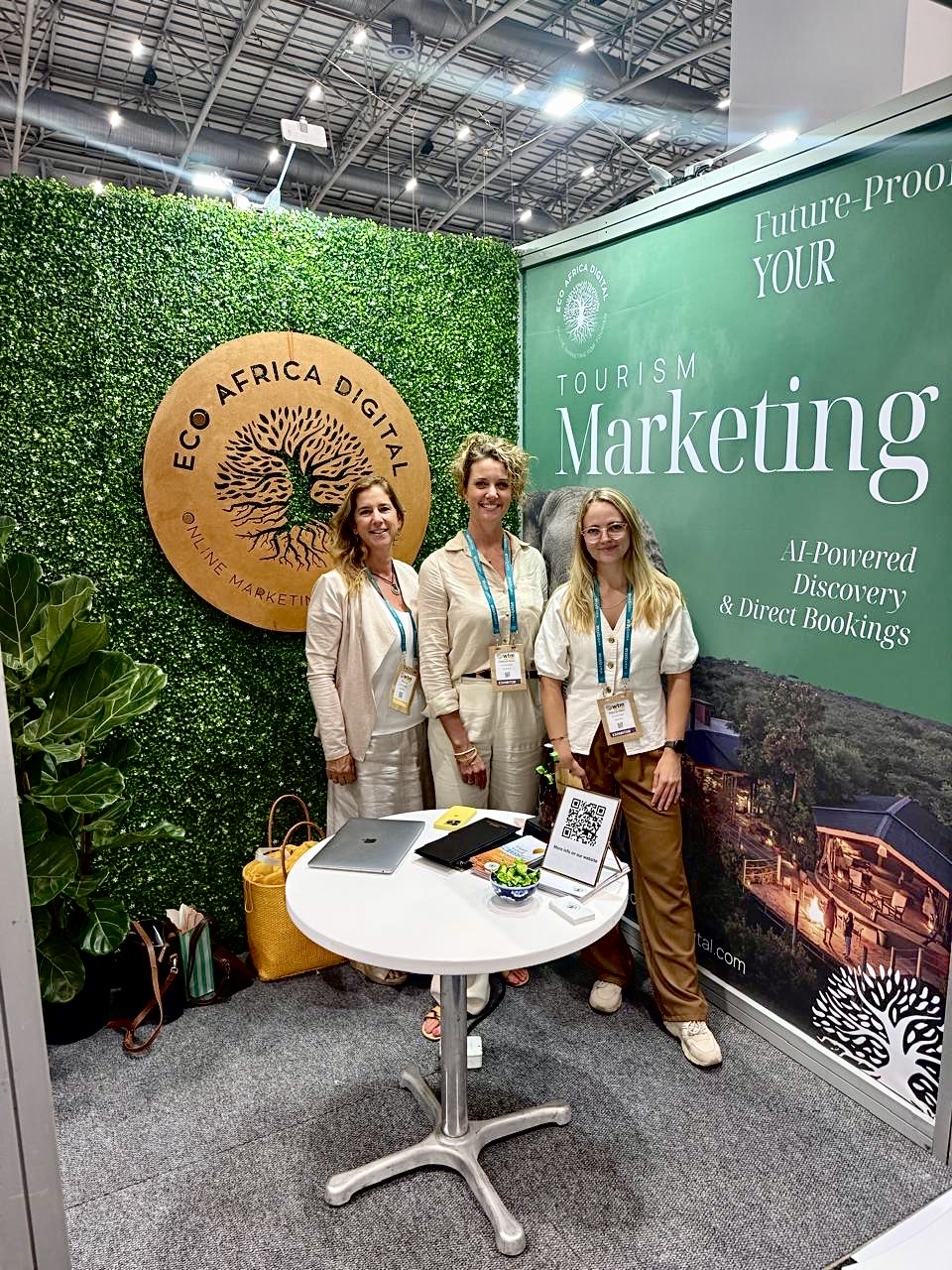
Eco Africa Digital at WTM Africa
Get in touch

Want to prepare your tourism brand for the future of search?

Eco Africa Digital helps tourism and hospitality businesses build SEO/GEO content ecosystems that improve visibility, strengthen trust and support direct bookings.

Contact us to discuss your SEO/GEO content strategy.

Read more about Eco Africa Digital on the links below:

Start Your Journey with an AI Blueprint in Mind

Further Reading

Aerial view of Grande Provence Heritage Wine Estate, Franschhoek

How Grande Provence built demand for the off-season and set a new trading record

October 29, 2026

Lizanne du Plessis shares the tourism marketing strategies that helped Grande Provence Heritage Wine Estate build off-season demand well ahead of its quieter months, and why the estate went on to report a new August trading record.

Read

ChatGPT Ads Have Arrived in South Africa. Here’s What It Means for African Tourism

October 23, 2026

ChatGPT Ads launched in South Africa and Kenya on 21 October 2026. Here’s who can advertise, how to reach UK, European and US travellers, and when ChatGPT Ads can outperform Google and Meta for tourism.

Read
Eco Africa Digital site visit to Care for Wild Rhino Sanctuary for AI digital marketing and conservation tourism strategy.

How Tourism and Conservation Brands Can Use AI Without Losing Their Human Story


May 21, 2026

There's a dangerous misunderstanding taking hold in digital marketing: that AI means replacing human storytelling with automated content. For conservation brands especially, that's exactly the wrong instinct. AI should make the human story easier to find and easier to act on — and nowhere is that more obvious than at Care for Wild Rhino Sanctuary in Mpumalanga.

Read

We Work With

Our Instagram

Latest from our Instagram feed